
School Security in 2025 and Beyond
July 1, 2024
School security is a topic on just about everyone’s minds these days, whether they’re parents, teachers or administrators. With a 60-year history of designing schools, BRPH has been at the forefront of school security, even helping to shape CPTED guidelines, or Crime Prevention Through Environmental Design, in the early days of the program’s inception. Senior Vice Presidents Cris Vigil and Bill Row share their insights and expertise on school security in this episiode of Outside the Box with BRPH.
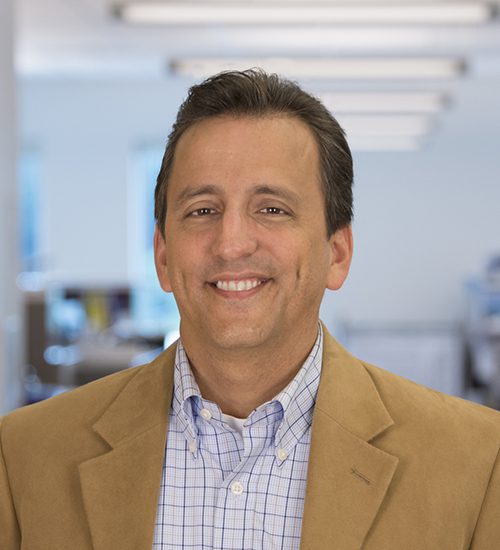
Cris Vigil, PE, LEED AP
Sr. Vice President, Principal
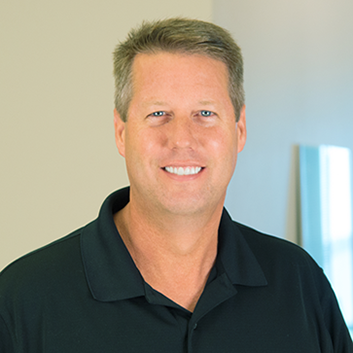
Bill Row, PE
Senior Vice President, CIO, Principal
Director of Education – Georgia
Michelle Salyer: Welcome to Outside the Box with BRPH, where we discuss the most innovative, interesting, and outside-the-box solutions to some of the most exciting and challenging projects in the world of architecture, engineering, design, construction, and mission solutions. You’ll hear directly from the problem solvers at BRPH as we dive deep into the latest news, trends and topics in aerospace, defense, manufacturing and industrial, commercial, education, entertainment and hospitality. I’m your host, Michelle Salyer, and I’ll be your guide as we open the lid on these topics and more, and invite you for an insider’s look at one of the most successful, fastest-growing employee-owned AEC firms in the United States. Welcome to Outside the Box with BRPH.
As Americans, we don’t need to be reminded of the number of school shootings that occur each year. School security is a topic on just about everyone’s minds these days, whether they’re parents, teachers, or administrators. With a sixty-year history of designing schools, BRPH has been at the forefront of school security, implementing and even teaching CPTED guidelines or crime prevention through environmental design in the early days of the program’s inception. Here today to talk to us about school security in 2024 and beyond are Cris Vigil and Bill Row, senior vice presidents with BRPH. Welcome Cris and Bill.
Cris Vigil: Thank you. Appreciate that.
Bill Row: Thank you, Michelle. It’s great to be here.
Michelle Salyer: Great. First of all, I know we’re all parents here, so this is a subject that’s very near and dear to our hearts. But for both of you, the topic of school security is one you’re very well versed in, as both of you have held major roles in the education market here at BRPH over the course of your careers. So give me a little insight into your professional backgrounds as engineers, but also as leaders in the firm’s education market. Cris, how about you first?
Cris Vigil: Oh, great, thank you. My degree is in electrical engineering, and so I got involved first in the school systems for security when the technology age came about, and we started introducing camera systems, CCTV systems and things, door access and security access controls that started up in, I want to say the late eighties, early 1990s. That was a fun time because it was new, but we’ve learned so much over the last 30 plus years on how to organize those systems correctly and how they get intertwined with the rest of a design that comes into school and the operation of the school. It’s all integrated and no system ever really works without the function of something else.
Michelle Salyer: And what is your role in the education business for BRPH now?
Cris Vigil: Well, in my history, I was involved in running our education market for almost 20 years, and I’ve done, designed or managed design or managed teams that do design on millions and millions of square foot of schools all over the southeast United States. As I work today, I’m senior vice president of BRPH companies in a corporate role that oversees a lot of our strategic initiatives. And schools is a very significant part of our market business. And there’s strategic initiatives that always affect our school markets, specifically safety and security schools is a strategic initiative as well.
Michelle Salyer: And Bill, how about you?
Bill Row: Yeah. So my degree is, I’m a professional civil engineer, but my love for schools started long before engineering. My mother was a principal in the public school system for over 40 years, so I got great insight of how-
Cris Vigil: I didn’t know that.
Bill Row: Yeah. Of how the administration works, how schools function. So I took that knowledge and passion for education into my career, and I’ve applied it throughout my career and it’s really been insightful because you have to match the design of the school to the function of the school. If they’re independent of each other, it doesn’t work. So currently a senior vice president with BRPH, and I’m overseeing the Georgia education market.
Michelle Salyer: Wonderful.
Cris Vigil: Interesting. My mother was a school teacher for 40 plus years.
Bill Row: Yeah.
Cris Vigil: So I didn’t realize-
Michelle Salyer: It’s in your blood.
Cris Vigil: It’s in our genes.
Michelle Salyer: The both of you.
Bill Row: That’s right.
Michelle Salyer: Yeah.
Bill Row: That’s right.
Michelle Salyer: And Cris, so you said your education experience dates back to the eighties, nineties, and I know all of us here are old enough to remember the school shooting at Columbine High School. Tell me how the landscape started to change after that time and how you were a part of that.
Cris Vigil: Yeah. Frankly, school securities became a big subject before Columbine, and we began instituting some practices into our school designs before that occurred, but frankly, it was a shocking event through the nation, and it really changed the focus to be heightened within schools all over the country. One of the school districts that was leading edge in the market very soon thereafter was in Mecklenburg County, North Carolina, and their secured force was part of the school district operations. And so I got a chance to sit with the chief there and talk over operational insecurity that they had and what programs they were pushing forward.
And school districts in the state of Florida, almost all of them at the time were relying on the local police force to provide secured force to the school. That changed dramatically as school districts began employing and operating their own police force. One of the leaders in Florida at the time, Florida’s loaded with some big school districts, but one of the leaders at the time was the South Florida area, Miami Dade County, Broward County, and the Palm Beach School District had their own police forces, and overnight they grew exponentially. That changed the landscape entirely.
Now the police was adequately with an affirmation involved in the school operations. In the early 2000s when the school district started to employ it, they were really employing an officer to be a resource officer at the school site. That changed dramatically thereafter, and the police force really became a part of the school’s administration. So officers became more counselors to the kids, more advisors to the administration. That changed the landscape entirely.
Michelle Salyer: And how about your involvement with CPTED? I understand you used to teach.
Cris Vigil: Yeah, so Crime Prevention Through Environmental Design is, the acronym as CPTED, and that became a guideline that was adopted, I want to think it was in the late 1990s, and I got the first bit of training there in North Carolina, and then we began instituting it here in South Florida, and that led me to be an advisor to school districts across the state. So I was asked and I spoke at a few conferences, one of them is the Florida Educator and Facility Planners Association, on CPTED principles and the integration of that into school facilities.
Michelle Salyer: And of course that work for Florida then spread to our markets in Georgia and other areas where we designed schools.
Cris Vigil: Yeah. That’s true. Now that you say that, it just dawned on me we even had some influence in the Las Vegas area in the 2000s where they also began to institute some CPTED principles as well. But those CPTED principles, we still do some today. They’re all over our school districts that we do throughout the Southeast US.
Michelle Salyer: Okay. And we’ll get into what some of those are in just a minute. Let’s talk first about new school construction and how districts can create a safer school from the very beginning of the project.
Bill Row: Yeah. That’s a great topic. And there’s several key elements that districts should implement in the school design. It all starts with that initial site assessment, right? Providing a secure perimeter fence with the appropriate gates is your first line of defense. Keep people from being able to meander and wander across your school site. Secondly, you want to design the buildings so that you minimize the number of exterior penetrations, meaning doors, access points. But you still got to meet egress code, and those doors need to be hardened. Glass needs to be either ballistics-rated glass or up to at least seven feet, and then maybe ballistics-rated film applied above. And then finally, one of the key points is a single point of entry, that secure point where all visitors have to come to a single point, be checked before they can enter the school. Right?
Michelle Salyer: In talking about perimeter fences and number of exterior doors and that kind of thing, it seems that those devices are very dependent on the people who use them. So in other words, if a fence is left unlocked or a door is left propped open, there goes the security.
Bill Row: It goes back to matching the design to the operation of the school. If you provide the line of defense and it’s not used, it really doesn’t do you any good. Right?
Cris Vigil: Yeah. And the difficulty comes with how the school operates. There’s a lot of schools where the operation of the school is very intermixed with the community around it. They’re a neighborhood school so maybe their cafetorium is a part of another function within the community, or maybe their play fields or playgrounds are a part of the community and they’re jointly funded in some way. So those concepts, they all have to span across everything about how the school is operated.
Bill Row: That’s a great point. That ties into where the perimeter fencing goes. If we need after hours access to certain buildings, we provide that access. It can still be secured, but we provide that access. Same goes to the play fields. We not only secure the outsides of play fields, but we also separate the insides from vehicular and bus traffic so a young student can’t just wander into a bus drive. Also prevents people from coming onto site as well.
Michelle Salyer: Yeah. You make a great point. It’s not just about active shooters or the bad guys coming in. There’s a lot of elements to school safety.
Bill Row: Safety and security.
Michelle Salyer: Mm-hmm. So you mentioned point of entry, single point of entry, multiple points of entry. Obviously, single point of entry is probably the safest in terms of, or most effective in terms of safety. But that approach is not necessarily going to work in a middle school or high school where you might need to have metal detectors or bag checks or things like that. So what do you do in that scenario?
Cris Vigil: That’s a tough question, and no scenario really maps out a perfect answer. I think if there was, we’d probably see some codes around it rather than guidelines or practice principles. It all depends on the school and how it’s operated. We had instituted in the Crime Prevention Through Environmental Design, a layered technique where the perimeter is a perimeter fencing, which generally keeps out the general population.
And then you’ve got another second layer, which is typically open to visitors and the general community coming to the property. And then a third layer breaks down the actual operations of the school, and maybe even a fourth layer breaks down the actual classroom where the kids are housed. It’s easy to say those things when you’re designing a school from scratch because you can work those layers into a single point of entry in a single building or a single pod, but that’s not how most schools are. Most schools already exist.
And so that operation, it gets far more complex and you got to think through all those concepts to make sure you create that layer scheme inevitably behind that process. The idea behind crime prevention, as you just said, isn’t always about the shooter. It’s about crime that can come from many different arrangements. It could come from an active individual coming from the outside into the school, and it can come from within the school, of the occupants within the school.
Michelle Salyer: Oh, good point. Especially at the upper levels, high school.
Cris Vigil: Yeah. It’s unfortunate, but it’s not always at the upper levels. It happens at the lower levels too.
Michelle Salyer: True, true.
Cris Vigil: Yeah. Yeah. But it happens. And so there are a lot of concepts about visual acuity and administrative oversight and a viewing angles within the school that makes a big difference.
Bill Row: But Cris brings up a great point. The design of an elementary school versus a high school is very different. And while you want a single point of entry at a high school, it’s impossible to bring up to 4,000 students into a single point. So you have controlled areas of access, and that may have metal detectors depending on the district or whatnot, but you still want to have that single point of entry even at a high school where visitors who are not known to that school, do not attend that school, come and are checked prior to entering the facility. So it’s critical to have that vestibule.
Michelle Salyer: Tell me about some of the other new developments, I guess either for new school construction or whether you’re doing a complete renovation. What’s some of the new technology that helps keep kids safe?
Bill Row: Well, like Cris mentioned, most of the facilities we have today are existing, right? They’re not new schools, and they weren’t designed around the standards that we have today. So BRPH has done a lot of studies on products that we can implement and use in existing facilities that don’t require a complete renovation. And some of these are Kevlar blankets. If you have a drywall on stud wall at your entry vestibule or lobby, in most cases, you can take down that leading edge of drywall, apply this Kevlar blanket to the studs, and then put two layers of gyp back up, and you’ve got a pretty secure facility, right? Then you’ve got to harden the doors and any glazing around it, but at least you’ve created a secure lobby to check the visitors in. The other things we’ve looked at are steel sheets that are ballistics-rated, can be applied behind the walls. Again, anything to keep you from having to do a complete renovation, tear everything down and build back up. So lots of solutions out there.
Michelle Salyer: Wow, that’s pretty amazing. Never would’ve thought of that.
Cris Vigil: Yeah. There’s also security systems, video surveillance systems are getting smarter. There’s now pretty economical versions of facial recognition and movement recognition that are picking up individuals moving through spaces that seem to be moving in a particular way.
Michelle Salyer: A suspicious manner?
Cris Vigil: Right, right. So they’re coming down in price. They’re obviously quite expensive when they first came out, but they’re coming down in price. I do foresee that in the future, we’re going to see that more often, and the alerts and alarms will actually key themselves back to the resource officer so that he can check those environments to see if something’s happening, something’s wrong.
Michelle Salyer: Okay. Or imagine if a student’s been suspended and shouldn’t be on property or something like that.
Cris Vigil: Right. Right.
Michelle Salyer: Interesting.
Cris Vigil: Or if there’s a person that’s been tagged by the district as an individual that’s made some threatening overtures, and that person would be through the facial recognition picked up if it’s in a school or a district grounds or something like that.
Michelle Salyer: Wow, that’s pretty amazing.
Cris Vigil: Yeah.
Michelle Salyer: Pretty high tech.
Bill Row: I touched on some of the elements you could use for an existing facility, but if we go and talk about a new facility just for a minute, right? It’s critical to have that, we’ve talked about that secure entry vestibule. But the ideal entry vestibule is more than just a checkpoint. If you can provide a conference room adjacent to that or maybe even a restroom adjacent to that, you can pretty much accommodate every need that a visitor has to that school without ever bringing them into the actual school facility. If you keep out of the school, it’s a safe school. So the design of that vestibule is important.
Michelle Salyer: So parent-teacher conferences, meetings with administration, vendors.
Bill Row: Anything.
Michelle Salyer: All that kind of thing, they can all be kept in that outer ring.
Bill Row: Correct.
Michelle Salyer: If you will.
Bill Row: Outside the perimeter of the school. It’s still adjacent. You can be checked in. Buzzed through in a locked door,
Michelle Salyer: You have a lot more control.
Bill Row: Correct.
Michelle Salyer: So it’s sad that we even need to talk about this, but I understand that some of the schools that BRPH has designed actually even have some hidden areas that are not visible from hallways.
Bill Row: It’s ironic how this came to be. Many of our elementary schools that we’re speaking of, elementary schools specifically here, have a requirement that in between classrooms for the younger children. We’ve got to have a restroom facility adjacent and maybe a teacher planning area and some storage. So being efficient, schools are about efficiency and building the square footage requirements, we combine those elements into a common area between the classrooms. And ironically, the kids can be brought into that common area. And we took that design a little further and we said, “Okay, if I’m standing in the corridor outside that classroom and I’m looking in the door, I want to make sure I can’t see the door to this common area.” So if you’re an intruder, it looks like you’re looking into an empty classroom.
Michelle Salyer: Yeah. Where’d everybody go?
Bill Row: Exactly. Why would I want to go in that empty room? Just move on down the corridor.
Michelle Salyer: That is amazing. Like I said, sad that we even have to think about that.
Bill Row: Absolutely.
Michelle Salyer: So Bill, you mentioned earlier that the site or the land that the school sits on is just as important as the design of the school itself. Would you explain a little bit more about why that’s so important?
Bill Row: Yeah, absolutely. I touched on the fact that that perimeter fence and appropriate gates is your first line of defense. Separating car and bus traffic prevents accidents. You never want to mingle those traffic patterns. And then providing a safe site design that doesn’t create areas of vulnerability. And what I mean by that, I’ll give you an example. Most school districts fall within cities or municipalities that might have zoning requirements. While most public schools are exempt from these requirements, they still want to be good neighbors. They want to participate and cooperate as much as they can.
And we worked with a municipality and school district recently that had a very stringent landscape requirement. And while it looks great, they were calling for a dense vegetative hedge to be placed in the green areas in a parking lot. We’ve talked about CPTED, right? And Crime Prevention Through Environmental Design guidelines tell you, don’t do this. Don’t provide an area where an assailant or someone who can assault you can hide, wait on you to get to your car in the parking lot after dark and then attack. So we would not provide those elements in a school design.
Michelle Salyer: The dense hedges?
Bill Row: The dense hedge. Put the landscaping at the front of the school where it’s visible to everybody, but not within the site. Again, we talked about many events happen after school at the gymnatorium or the whatever. We need to be thinking about the safe…
Michelle Salyer: Yeah, a lot of things I never would’ve thought of.
Bill Row: Safety of the visitors.
Michelle Salyer: Certainly. That’s amazing. So you said that that was a city municipality that was pushing for that?
Bill Row: Correct. And they understood. When we explained the safety requirements behind it, they said, “No, we get it. Thank you.” And they dropped that requirement.
Michelle Salyer: Wow. So I imagine if BRPH had not been involved in those discussions that the school might have acquiesced to that request.
Bill Row: Right. People don’t realize you don’t know what you don’t know. We’re not just here to do architecture and engineering. We’re here to help guide you.
Cris Vigil: That sparks a memory. I remember about 15, 20 years ago where we got hired by a school district to do an evaluation on the security of the school, it was a handful of schools, and I remembered one of the aspects we had was removing landscaping. It seems crazy because the school districts like to be, their school to be inviting. So they want the kids to feel like it’s a fun, safe place to be. And part of that is having an environmental field that’s very nurturing. It’s nice landscaping and nice whatnot, but we got to be careful about what we design for landscaping. The hidden areas can be easily not hidden at the beginning, but in a couple of years, the overgrowth of the vegetation could actually cause that.
Michelle Salyer: Yeah. Yeah. Well, speaking of outdoor spaces and the importance of those, and I know you mentioned this earlier in terms of the school population itself, students getting along with other students. Tell me a little bit more about why open air spaces, green spaces, fresh air, why that’s such an important part of school safety.
Cris Vigil: So back in the ’90s, and I want to say the early 2000s, there was a lot of studies done about the work environment or the student’s learning environment. Prior to that, the nation had really gone through a very rigorous classroom environment that was pretty pre-set. It was a standard 20 to 30 kids in the classroom, teacher at the front desk, marker boards at the front of the room, and it was lecture presentations. Things began to change as the generations changed and the teachers became more involved with the kids rather than lecturing to the kids and began pulling them out into other spaces to be able to do other functions.
Michelle Salyer: Hands-on learning.
Cris Vigil: More hands-on learning. Right. And the kids became more involved with their own movement within a space or outside a space. So the generations that rolled behind that of the school designs really began to institute some more outdoor learning areas and some more group learning areas. What we learned through those social environments is that the spaces have to be designed with enough space to move about. Because when you take a number of people and put them in a smaller confined area, that’s when more environmental issues happen between the kids or between the parents or between the parents and the teachers or something like that. So the outdoor environment, those outdoor play areas, those outdoor learning areas, the outdoor spaces had to be designed so that they could give the kids and the parents and the teachers a place to move about. That creates another issue about crime prevention. And frankly, we can resolve that with some open play areas and open spaces.
Michelle Salyer: Okay. But then we don’t necessarily want those open areas to be visible to the public or…
Cris Vigil: Right, right.
Michelle Salyer: So how do you solve that?
Cris Vigil: Right. So that’s, again, depends on the operation of the school and how that environment works within the community. But in general, the idea is to try and create those spaces within the school circumference. So as you design the buildings around the school, you want these outdoor areas to be inside one of the third or fourth layers of security. So you’re in that courtyard area, that enclosed exterior courtyard area or something like that.
Michelle Salyer: So we’re seeing a lot more outdoor spaces, yet they’re not necessarily visible to the exterior of the school. They’re all enclosed-
Cris Vigil: Correct.
Michelle Salyer: In that safe perimeter.
Cris Vigil: Yeah.
Michelle Salyer: We’re seeing a lot more vocational programs in some of the better funded districts. We’ve designed some high schools that have automotive repair class, equestrian programs, construction programs that all involve those outdoor spaces as part of the necessary design.
Cris Vigil: That’s right. It has a lot to do with the nation’s push towards more private schools, more chartered schools, more specialized schools, and it has forced the school districts and the public arena to similarly do the same. So although vocations that we know of in the ’70s and ’80s have almost disappeared from the school arrangement, different programs have come to basically create independence and differences between the schools so that they can be more selective by the parents as where they want their kids to go.
So inevitably, we end up with these other things. Like you mentioned, equestrian is an excellent one. We’ve had a school where they had horses on the campus. We’ve had other programs related that you would’ve normally assumed to be shops, like machine shops, but instead now they’re robotics labs. Now they’re outside scientific programs that are being done. So the environment has changed, which makes the public need to have access to those areas. Now we have to work that out through the security systems.
Michelle Salyer: Seeing a lot of corporate partnerships with schools as well.
Cris Vigil: Correct. That’s right.
Michelle Salyer: Wow. A lot of things to consider.
Cris Vigil: Yeah. It’s changing. The environment of school and the education of school has changed and it continues to evolve.
Michelle Salyer: So Cris, you bring up such a good point about giving the kids space to breathe, not having too many bodies packed in a small area, the advent of more hands-on learning. What are some other ways that we can use design to provide educators and students with other learning areas or other places within the school that they can safely convene?
Bill Row: Yeah, great question. We are always looking for areas to provide learning environments outside the classroom. Students do better when they can move about and have different environments to learn in. And we provide niche areas, and maybe we widen a corridor and we provide breakout areas where students can have small group discussion or learning in a corridor area, and we provide the AV equipment required to have full teaching there. Or maybe you can design the school to have a protected courtyard where your art classes need an exterior access, and your science labs need an exterior area, and they’re still within that secure courtyard. So giving them outside learning areas that are still protected and safe.
Michelle Salyer: When we talk about school security, we hear a lot about sight lines. Talk to me a little bit more about what that means, how we can affect sight lines with design, so we’re not just relying on cameras, but giving administrators or faculty.
Cris Vigil: Yeah, that’s an important topic. We talked about all these things, outdoor courtyards and other vocational programs that are coming out, but inevitably it comes down to, can the administration work within the confines of the administrative personnel? Because inevitably, school districts are just not going to afford to have more staff. So in the designs we incorporate, whether we’re renovating schools or building new schools, we incorporate some concepts of sight lining. And that is to give an administrator multiple views while the school is in operation to see what’s happening within the school.
And this isn’t necessarily about the real fear of an active shooter. This is more about viewing the kids and the students themselves, how they interact, because there could be a lot of diffusion about violence or activities that happen in a school based on just seeing it before it starts.
Michelle Salyer: And the kids know that somebody’s watching.
Cris Vigil: And the kids know that somebody’s watching them. Right. I remember at a high school back in the ’90s where they wanted the assistant principals to all stand up on a ledge overlooking the kids in a courtyard like they’re in a prison. That’s not at all inviting, right? But the idea is necessarily that they’re in the flow of the traffic of the children, and they can see down, left, right, back behind them in a quick second to see the whole arrangement of what’s happening around them.
Michelle Salyer: Well, without feeling like a prison.
Cris Vigil: Yeah. Without feeling like a prison.
Michelle Salyer: I know when we were all in school years ago, fire drills were the big thing. So when we talk about fewer points of entry or just all of the layers of security, is there a balancing act between fire safety and keeping the bad guys out versus letting the kids out when they need to get out?
Cris Vigil: Yeah. So one thing’s for sure. There is no balancing act with the fire codes. The life safety and fire codes are what they are. They take precedence on all exit discharges and safe means of egress from the campuses. So we have to deal with making sure whatever we’re going to do is fully compliant. Now, one thing, very easy, simple things we can do are removing all the hardware off of doors that are in exit paths from the outside of that path. So people can go through the doors, they exit, but they can’t come back in. So that’s an easy one. But there’s other things that happen within campus schools where we have exit paths that go through gated systems or other structural wall systems or something like that, that have the same path of egress, but not of entry.
Michelle Salyer: Okay. You raise a good point. We’re not just talking about K through 12 here. This applies to higher education colleges, universities.
Cris Vigil: It does. And again, we keep repeating the same concept about it all depends on how the school’s operated. Higher education is completely different. Not at all the same as K-12. And there’s a lot more involvement of coming in and out of campus, and there’s a lot more car traffic. There’s a lot more-
Michelle Salyer: Harder to control.
Cris Vigil: Harder to control in those environments. And so there’s a concept there that’s different about a campus scheme that’s separated out by the same visual sight lines, but it’s not done within a building. It’s done from the outside of the building. It’s done through courtyard schemes and walkway path traversing schemes, and the buildings are typically more spread apart in order to create more of those visual acuity-
Michelle Salyer: So nothing is by accident. This is all…
Cris Vigil: All planned and designed. Right. Yeah.
Michelle Salyer: Interesting. So Bill, you’re currently overseeing our education market in Georgia, and I know those school districts are very fortunate to have the SPLOST dollars. For those that don’t know, that is the Special Purpose Local Option Sales Tax. So basically, extra taxpayer dollars that they get to spend on projects like school security. So give us the top three things that you would recommend to schools that are looking to spend some of that money.
Bill Row: So we’ve touched on them, but they’re very imperative. And it starts with your secure perimeter. Site fencing, appropriate gates. Secondly, all your exterior doors and glazing. Hardening those access points. And then finally, that secure entry vestibule. At least at a minimum, have a checkpoint that you can buzz individuals in. Ideally, you do more than that. You can have that conference room and other amenities, but at a minimum have that secure vestibule where you can check visitors before they actually enter the school.
Cris Vigil: The other important part is about keeping the criminal out, but it’s also about making sure that the environment within the school prohibits the criminal from coming from within. Kids can be confined into spaces or locked into spaces, which can cause other kind of safety and security issues.
Michelle Salyer: What do you mean by that?
Cris Vigil: Well, we started to talk about the outdoor spaces, but there’s a lot of old schools where the classrooms and the corridors just throw a lot of kids into one area very quickly, and those become a problem where the kids are bumping and shoving into each other and can cause-
Michelle Salyer: That sounds like my high school.
Cris Vigil: Yeah. It sounds like all our high schools when we were kids, right?
Michelle Salyer: Yeah.
Cris Vigil: But those are still prevalent today. And so finding ways to try and make the kids have other areas to go, they naturally will find them when they’re given the opportunity to. The typical sociological impact is we don’t like to be in confined areas, and so we’ll find another place to go when we’re given the opportunity to go there.
Michelle Salyer: And I think that bleeds into scheduling and helping the administration look at other ways when design’s not possible.
Cris Vigil: You’re right. You’re right. Some schools have resolved that through block scheduling or changing of class schedules for different grades or whatnot to try and alleviate those overpressurized areas.
Michelle Salyer: So there’s a lot of advice and guidance and counsel that you can provide to districts.
Cris Vigil: That’s right. It’s not all about bricks and mortar and design of architecture, engineering, construction. It’s really about operating the school.
Michelle Salyer: Wow. This has just been so informative and really encouraging to hear that our schools are becoming safer. Thank you so much for joining me today, Bill and Cris.
Cris Vigil: Thank you.
Bill Row: Thank you for having us.
Michelle Salyer: Thanks for joining us today for Outside the Box with BRPH. We hope you’ve enjoyed today’s episode as we explored some of the most innovative and challenging projects and the most pressing issues and trends in the AEC world. Learn more about us at BRPH.com, email us at [email protected], and follow us on LinkedIn, Facebook, Instagram, and X. You’ll find this podcast on Apple, Spotify, or wherever you find your favorite podcasts. Be sure to subscribe so you’ll be notified when new episodes are posted. See you next time on Outside the Box with BRPH.
***
Notice: Your access to any BRPH Companies, Inc. (“BRPH”) podcast is an acknowledgement by you that the entire content and design of any such podcast is the property of BRPH and protected by U.S. and international copyright and trademark laws where applicable. You may not copy, display, edit, retransmit, or share any BRPH podcast, or content therein, without the prior express written permission of BRPH.
Disclaimer: Your access to any BRPH Companies, Inc. (“BRPH”) podcast is an acknowledgment by you that BRPH makes no representation, warranty or guarantee as to the accuracy or completeness of any information contained in any BRPH podcast. The opinions, ideas, recommendations, and other information contained in any BRPH podcast are for general purposes only and shall not to be relied upon for any reason, including, without limitation, professional advice.
BRPH expressly disclaims all liability or responsibility for any direct, indirect, special, incidental, consequential, or other damages arising out of your use of, reliance on, or reference to, any information contained in any BRPH podcast.