
Podcast: Launching Point-A Look Back at 60 Years of Spaceport History, Part II
February 11, 2025
In Part II of this episode of Outside the Box with BRPH, we look back at 60 years of designing America’s spaceports and hear from three of the engineers who were instrumental in creating that landscape. See how that knowledge is being passed down and built upon to create the spaceports of tomorrow. President & CEO Brian Curtin, Vice President & Chief Engineer Andy Miller and former Principal Art Waite discuss their most memorable moments, the projects that kept them up at night and the innovations that changed the face of spaceflight forever.
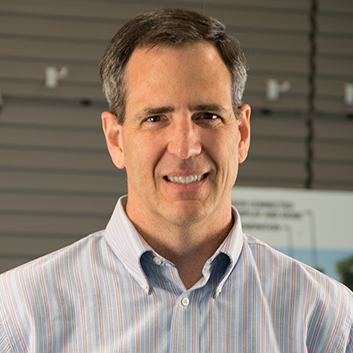
Andy Miller, PE, SE
Vice President, Chief Engineer, Principal
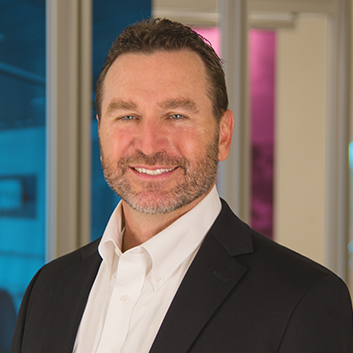
Brian E. Curtin, PE
President & CEO, Chairman of the Board
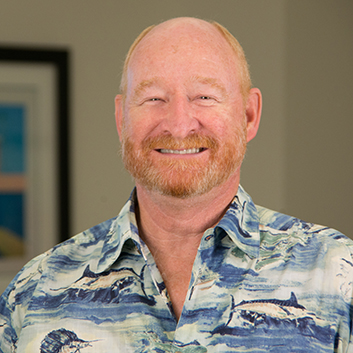
Art Waite
Engineer/Consultant, Former Principal
Click “Play Audio Podcast” or “Read Transcript” below or listen on your favorite podcast apps:
Play Podcast:
Michelle Salyer: Welcome to Outside the Box with BRPH, where we discuss the most innovative, interesting, and outside-the-box solutions to some of the most exciting and challenging projects in the world of architecture, engineering, design, construction, and mission solutions. You’ll hear directly from the problem solvers at BRPH as we dive deep into the latest news, trends, and topics in aerospace, defense, manufacturing and industrial, commercial, education, entertainment, and hospitality.
I’m your host, Michelle Salyer, and I’ll be your guide as we open the lid on these topics and more, and invite you for an insider’s look at one of the most successful, fastest-growing, employee-owned AEC firms in the United States. Welcome to Outside the Box with BRPH.
Welcome back. We’re continuing our special two-part episode on Spaceport history today, highlighting some of the most complex and challenging projects that BRPH has ever tackled. Once again, with me today are three of the men who helped establish the firm’s reputation in the aerospace industry. Retired engineer, Art Waite, CEO and Chairman of the Board, Brian Curtain, and BRPH’s longest-running team member and Chief Engineer, Andy Miller. Let’s jump right in.
I’d like to talk about one of the largest aerospace jobs that BRPH has had, and I understand that was the Eastern processing facility for the National Reconnaissance Organization at Cape Canaveral Space Force Station. Brian, do you want to talk a little bit about that project?
Brian: Sure. Yeah. That was one that Art led from the very beginning. We did a lot of planning for that, oh, about 20 years ago, and then they had incremental funding. But again, it’s a facility that handles some of the, I’d say, the most sensitive payloads that we have as a nation. So everything about it is critical. Nothing can fail in that facility. So the way it was designed, the way it operates, its concept of operations is just really unique what they do there, and it supports some very important launches that we have.
It first came online about 2012, 2013, and we’ve been working ever since for different modifications and upgrades, and right now, it’s just pretty much the premier processing facility in the nation.
Michelle Salyer: You want to add to that, Art?
Art: We can’t talk a lot about what goes on inside it, but it has some unique capabilities. It’s really a place any pay loader would be happy to come.
Andy: Another aspect of it is though, that they have refined what they do inside, so they’ve had to modify the outside. So we’ve actually designed some additions to that facility recently that are currently under construction. So it’s really interesting to be a part of a facility, and then keep adding to it twenty-some years later.
Michelle Salyer: That speaks to the client relationships that you’ve been around long enough to do the rework.
Andy: Absolutely.
Art: That’s very important to maintain those relationships.
Michelle Salyer: Right. So we’ve talked a lot about commercial spaceflight and the advent of so many commercial launch companies. How did BRPH make that shift from mainly government launch facilities to just the tremendous amount of commercial facilities? How did that change the business model?
Brian: Yeah, I’ll turn it over to Art here in a second. But for the most part, I think it was because of the innovation. I mean, Art touched on it a little bit that the government work that we did, it was all phenomenal work, but it was also fairly expensive. And a lot of the commercial clients, especially these startups, just couldn’t afford that, especially until they kind of proved themselves.
So they were always looking for what we like to term, kind of the scrappy solution. They wanted something that would work, something that could get the first X number of launches off, but maybe it wasn’t going to be around for 30 or 40 years, but it was really important to prove.
And so, Art and Andy and the team was just really phenomenal with coming up with these extremely innovative, cost-effective, and then, probably as important was things that could be designed and built very quickly. A lot of these commercial companies, for them, certainly time is money, much more so than maybe others. And so, they really had to have something that could work, could work quickly. And the fact that we had such a great background, we pretty much knew what could work and what wouldn’t. Art and the team would just set upon doing just some phenomenal design innovations. Art, you want it pick it up?
Art: No. Where to go from here? Well, part of it was the advent of companies like SpaceX and their vision. Blue Origin coming along with reusable launch vehicles instead of use it once and throw it away, economies of scale. So a lot of things, as the shuttle program was retired, it had served its useful life, 135 missions, the Space Station was built as operable. We don’t really have to keep the shuttle flying anymore. What do we do next? So we’ve got a lot of leftover facilities.
So part of that was opportunity to repurpose them more for the commercial market. OPF-3, Orbiter Processing Facility 3, at Kennedy Space Center, which was been turned over to Boeing, we were fortunate enough to have the design job to gut that place and make it a manufacturing facility for the Starliner, the commercial crew capsule.
Similarly, we had the job of renovating or repurposing OPF-1 and OPF-2 for the X-37B, which nobody knows what it does, but it does it well. So again, the opportunity to repurpose things. Space Florida, I think has basically a lease on the old shuttle landing facility now, and BRPH’s civil group is helping them out tremendously, putting boots on the ground all day, every day as they repurpose the area alongside the landing strips to be commercial processing, commercial services, turn it into more of an airfield type operation.
Michelle Salyer: And of course, the Amazon Kuiper facility.
Art: The Amazon Kuiper facility, yes. We wrote the requirements document for them, and then did the design work, had many face-to-face sessions here in the office, maintaining those client relationships, came up with several different options about what do you really need? How can we help your flow? Do you have any hazardous processes? No, it’s some pressurization tanks, but nothing too bad.
So through several iterations and literally sitting down at the whiteboard and getting out our markers and then translating that into CAD drawings and say, “Here’s what we think.” And that’s under construction now and…
Michelle Salyer: Opening soon.
Art: Yeah.
Michelle Salyer: Do you want to talk a little bit more about the Kuiper program?
Brian: It wasn’t Kuiper, but when we were talking about some other things there, I was going to have Andy talk about the Orion program. Just want… Thinking about repurposing old NASA buildings that either Spaceflight has taken over as the landlord or others are using now.
Andy: Brian, now you stumped me.
Art: At the ONC building down in the Kennedy Space Center.
Andy: Oh, sorry.
Michelle Salyer: So many, it’s hard to remember them all, right?
Andy: Yep. It is hard to remember sometimes, but the ONC building, that was completely redone on the inside, the structure itself remained the same, but they completely changed all the processing inside so that it was a brand new clean room, essentially. And they had vacuum chambers that were removed and new door openings put in, and all new electrical and mechanical systems to make it safe to process satellites and equipment for that program.
Art: The Orion spacecraft. Yeah.
Andy: Right. Yeah. And so I mean, to this day, the Orion is the only purpose-built spacecraft that can get humans to Mars. They’ve had one successful trial launch with it, but that’s where they do all the final assembly of the Orion. Lockheed Martin does that. So we did that for Lockheed Martin and NASA.
Michelle Salyer: And would you say that that clean room experience for the aerospace industry has led to some manufacturing work as well for BRPH?
Andy: It has. Yeah. So we’ve also worked for a lot of these companies also on some of their other defense department type work, where they have similar type of high reliability spaces, whether they’re clean rooms or the types of utilities they bring in. So, yeah, we’ve been able to come pretty much go full circle, but from aerospace to manufacturing and back to aerospace again.
Michelle Salyer: Brian, do you want to talk a little bit more about what BRPH did for the Amazon Kuiper payload processing facility?
Brian: Oh, sure. Yeah, that’s a real success story for us. So with that one, meeting with the client, figuring out their needs, and then again, for them it was an awful lot of wanting to do something a little bit faster, a little bit less expensive, no bells and whistles, was something that was highly functional, and also expandable. And so when it came to that, that was a perfect solution for a design build type of project delivery.
So for that, in addition to the design of that project, we also built that. So we’ve been working that now for about the past two years. So from initial concept and discussion until we opened the doors about two years. So for that type of facility, for what it does, that was a real achievement.
But it really brings to fore what BRPH can do with everything we have in-house. The fact that we can design everything in-house, all the concepts, the creativity, the innovation, and then, they actually get out there in the field and build it. That’s a testament to the true master builders that we are.
Michelle Salyer: Fantastic. Your careers have spanned three NASA programs, of course, shuttle Constellation, as Andy mentioned, and now the space launch system or Artemis program, and of course the booming commercial space industry. So looking back over your careers, what do you feel are the most exciting technical developments that you’ve been able to witness or be a part of? That’s a tough question.
Andy: Well, I think the most exciting part is the speed at which the commercial launch industry has operated. I mean, they have really changed what it takes to get rockets off the pad. I mean, you just see SpaceX these days and launching every couple days.
Michelle Salyer: Sometimes twice a day.
Andy: Right. That is unbelievable compared to what it was when we first started. They were lucky. NASA was lucky to get a few launches off per year, and now it’s completely changed.
And BRPH has been a big part of that, and we’re working more on the Cape Canaveral Space Force Station right now. There’s new innovations that we’re implementing on all the old launch pads. There’s a dozen old launch pads along the coast there, and we’re taking the old facilities and revamping them, or tearing them down and bringing in new facilities for these commercial launchers. And I just think that that’s the most exciting thing that I see is there’s going to be a lot more launches coming up.
Brian: The quick turnaround, the fact that these commercial launchers, and we work for all of them, and each of them has a little bit different type of business plan, but for the most part, it’s how to launch more frequently.
So for SpaceX, they started off with just returning the first stage, and the second stage kind of burned off in orbit, which was just phenomenal, that we really hadn’t seen anything like that before. And so now a lot of the launchers are getting to the next step, which is to also return the second stage, and then even if it’s a small rocket, maybe to return the stack.
So what they’re doing with that, and they’re able to enable turning around their launch in 48 hours or a little bit more after they do their fueling. It’s really incredible. So once that happens, not just the timing, but the costs come down so much more, and the capability goes up so much more, that the access to space is really going to be much different in 10 years than it is right now.
Michelle Salyer: How about you, Art?
Art: Well, technically the Buck Rogers of the 21st century stuff, actually bringing those boosters back, and if you’ve ever been out to the Cape and watched a landing, it’s pretty impressive.
Michelle Salyer: Yes, I could not have imagined when the shuttle program ended, what the Space Coast would look like today. It’s certainly come about a lot faster, as you said, Andy.
What do you think are some of the most challenging projects you’ve worked on? Andy, you mentioned one earlier on, but has there ever been one that you just thought, this just simply can’t be done, but then you ended up figuring it out?
Andy: Well, there’s been a lot of them I’ve been stumped by, and it’s very difficult to put my hand on exactly one of them. But I think that the modifications that we did to the LC Launch Complex 17B for the acoustics was really my most challenging project ever, because it took a lot of engineering know-how to make that happen.
Michelle Salyer: Okay, interesting. How about you, Art?
Art: For sheer complexity, probably the Eastern Processing Facility. It’s got something for everyone, and a lot of it. And of course, dealing with segmented construction costs or budgets. We actually started concept drawings or conceptual floor plans in 2004, started design in 2005 while we’re actually working with the government to write the requirements document, and then trying to get things in the ground quickly.
The Air Force had done a study and determined they had a bottleneck down the road. That’s what led to the whole EPF. They could not accommodate all their spacecraft or necessary flights on the East Coast and the West Coast. So that’s what led to that.
They considered some other things. So it was a combination of fast track and design build. So we were putting concrete in the ground before we had all the steel design, and we were putting steel up before we had all the interiors figured out. And so, there was a lot of technical challenges during the design and throughout the construction to be sure that that thing functioned as it needed to.
Michelle Salyer: How about you, Brian?
Brian: Well, similarly for the team, the Blue Origin Launch Pad here at the Cape Canaveral is really one of our premier projects. So Blue Origin came to us about a decade ago with the requirement to put a launch pad up for a rocket that they had yet to design. And so we had to start in, kind of like Art was just saying for the EPF, we had to start out designing for some very preliminary loads for the rocket, for the size, for the utility connections and all the rest. And it was a good bit of back and forth as they went through and developed the rocket and how they were going to launch with the concept of operations, and how the launch pad requirements would change with that. So the team did a phenomenal job.
And we had talked earlier about some of our commercial launch work, which for the most part is medium-sized rockets. This of course, is no medium-sized rocket. The world hasn’t seen it take off yet, but when it does launch, it’s going to be quite impressive. And we’re talking about things like Apollo Saturn V type size. It’s an incredible launch pad, what it can handle, for the new Glenn, as well as for future rockets.
And so, something to really be proud of that the fact that this is an all-new built from scratch launch pad pretty much in the world. It’s the number one pad once they get this thing launched, in terms of new technology and everything that we’re doing there. And we should be able to see the first launch next year in 2025, so it’s going to be really exciting.
Michelle Salyer: Yeah, very exciting. Can’t wait to see that. Well, speaking of the Apollo Saturn V, I’m guessing that watching the moon landings and the Apollo program when you were younger had a big influence on your careers. What does it mean to you that we are going back to the moon after 50 years?
Art: Sure has taken a while. That definitely was impactful for me. My parents went to bed. I stayed up all night watching the first Apollo 11 landing. It’s just great times. I can’t imagine what Ernie and Lyle and Harry saw out there in the early days of the Mercury program when it was go, go, go, all the construction was out there. We’ve seen the photos where you’ve got like pads 11, 12, 13, 14, 15, and 20 line the whole gate. Really neat stuff.
I’m glad we’re finally going back to the moon, and I’d like to get to Mars in my lifetime. I’d like to see it happen, but I think it does need to be sequential, just like we built the Space Station so we can learn to live in space. Now we need to learn to live on another place like the moon first, so we can take those lessons learned and safely go to Mars.
Michelle Salyer: Very good.
Andy: Yeah, I think it’s exciting that this is going back to the moon as a stepping stone to the rest of the solar system and beyond, eventually. But it’s really exciting to get back on the moon, and use that as a place to prepare and get ready to go further.
Brian: And for me, I started my career in the DC area, working at the Goddard Space Flight Center, and then from there working for the Naval Research Lab, but for their space systems branch for all the things that the Navy was launching back then. So then to eventually join up here with BRPH, with all of our aerospace work, it’s really been phenomenal.
So yeah, to go back to the moon, I mean, the first time was exploring and it was kind of the fun thing, “Hey, we’re really here,” but we didn’t really do a lot with it. We brought back some samples, did a few other things, but didn’t really do much there. Now, the fact that we can actually live and work and do things at the moon that are all, like you said, kind of get us to the next stage, whether it’s Mars or other places, that’s really phenomenal in the advancement that we’re making in space. Very exciting.
Michelle Salyer: On that note, how do you see BRPH’s future aligning with that, and where do you see the company going in the next 10, 20, or next 60 years?
Brian: So certainly with the work we do in aerospace, we’re such a forerunner in that, that we’ve attracted a lot of other people that have a passion for space, both from what they’ve seen and what they expect to see or in their lifetime. And so, we have this core group of folks that are just really passionate about space and that truly can see the vision of where we’re going. So with that, for our aerospace work, it’s really nothing but going up and up. We’ve had a lot of work out there. We’re talking to all the launchers, all the processors, things here, nationally, internationally, but pretty much everywhere. And so I really see this expanding in a phenomenal way just as space exploration really starts to get more into a daily type pace, I see us really expanding a lot the next decade.
Andy: I can see us actually designing processing facilities on the moon to be built on the moon in the years to come. They have to be able to get away from earth’s gravity, and getting off of the moon is a simpler way to do that. So I can see designing facilities for the moon.
And then, I can also, beyond that, there’s going to be a whole all kinds of new technologies for space travel itself, that they’ll need all kinds of facilities to design and build that new technology. And I can see BRPH being a big part of that.
Michelle Salyer: Interesting. Anything to add there, Art?
Art: I was thinking along the same lines. First, they’re going to need more processing facilities for the components that they’re going to put on the moon. As big as Kennedy Space Center is and other such places, there’s not much capability left. Not much vacant space. Everything’s being used for something, whether it’s been repurposed or whatever. So we’re going to need new facilities to handle that throughput.
I like Andy’s idea a lot. I was thinking along the same lines. I don’t know if we are in space habitats, but certainly something like processing facilities, so you can extract moon ice and break it down into water, or into oxygen and hydrogen, so you’ve got propellants manufactured there locally.
Michelle Salyer: Exciting to think about.
Brian: Yeah, I mean, most likely the industry, they’re getting away from hypergols. I mean, they’re expensive. They’re toxic. It’s hard to handle them. So as you get into different fuels and into different types of propulsion systems that use things other than fuel, it’s really a brave new world out there.
Michelle Salyer: So much knowledge in this room. It’s so fascinating and so impressive. How do you ensure that you are passing along this knowledge to the next generation of architects and engineers and instructors?
Andy: I think it’s all about mentoring. I am the chief engineer here at BRPH, and I take time to work with all the younger engineers to pass on my knowledge to them so that they’re prepared to advance that further, as they grow in their careers. So it helps them get a jump start on knowing where to look for solutions, where problems have happened in the past so that they don’t have to go backwards. They continue going forward from here.
Michelle Salyer: Mm-hmm.
Art: One of the things I always try to do is get the people who are sitting well now at their computer, instead of their drafting table, doing these designs, get them out into the field so they can see what it was that was on paper, what it looks like in the field to give them a better understanding, and that maybe spark a little bit more interest instead of, “I’ve got to go to work today.” “I want to go to work today.”
Michelle Salyer: Brian, how about from the company standpoint?
Brian: Well, certainly we have some structured programs. Andy touched on a few with the mentoring that we have. We also have a different series for the original founders, before they unfortunately passed away just a couple of years ago. We had interviewed them several times for their life histories, their life stories, wrote down some biographies for them.
And then as we go on here, there really is that passing the torch from one group to the next, in terms of lessons learned, after action, reviews get out there and experience things. Kind of apart from work, we’ve got a group of people here that just love space. Even when they’re not at work, they spend their time reading about space, going through the space books, space movies, going out to meet the astronauts. So a lot of what they do day to day has to do with aerospace, just apart from work. With that passion, they’re just always looking for ways to improve and to build upon what’s been done before them. The future is very bright. They’re not going to get mired just in where we were. They’re going to continue it even further.
Michelle Salyer: Fantastic. Art, one last question for you. I know that last year you won the National Space Club Florida Committee Lifetime Achievement Award. What has that award meant to you in terms of your long career?
Art: First, I think for like 41 years, starting at Pan Am World Services and then EG & G at Kennedy Space Center, and then, finally getting here in 1986, about 41 years fully active, fully engaged in the space program. Consider myself very fortunate to have a guy like Ernie Briel mentor me and then kind of turned me loose. I like to joke that nobody knew exactly what I did here, but we always made money, so they left me alone. So I consider myself very, very fortunate to have been along the path I have seen. That really validates that I didn’t waste that 41 years. I really did truly look forward to coming to work.
Michelle Salyer: I think from listening to you share some stories today, we know that you certainly didn’t waste that time.
Thanks for joining us today for Outside the Box with BRPH. We hope you’ve enjoyed today’s episode as we explored some of the most innovative and challenging projects, and the most pressing issues and trends in the AEC world.
Learn more about us at brph.com. Email us at [email protected], and follow us on LinkedIn, Facebook, Instagram, and X. You’ll find this podcast on Apple, Spotify, or wherever you find your favorite podcasts. Be sure to subscribe so you’ll be notified when new episodes are posted. See you next time on Outside the Box with BRPH.
***
Notice: Your access to any BRPH Companies, Inc. (“BRPH”) podcast is an acknowledgement by you that the entire content and design of any such podcast is the property of BRPH and protected by U.S. and international copyright and trademark laws where applicable. You may not copy, display, edit, retransmit, or share any BRPH podcast, or content therein, without the prior express written permission of BRPH.
Disclaimer: Your access to any BRPH Companies, Inc. (“BRPH”) podcast is an acknowledgment by you that BRPH makes no representation, warranty or guarantee as to the accuracy or completeness of any information contained in any BRPH podcast. The opinions, ideas, recommendations, and other information contained in any BRPH podcast are for general purposes only and shall not to be relied upon for any reason, including, without limitation, professional advice.
BRPH expressly disclaims all liability or responsibility for any direct, indirect, special, incidental, consequential, or other damages arising out of your use of, reliance on, or reference to, any information contained in any BRPH podcast.